Reviewed by Turf & Community Captains
Confused between turf shoes (TF) and studs (FG) for artificial pitches? Learn the difference, avoid joint injuries, and pick the right footwear for turf play.
Choosing the wrong football footwear for synthetic turf causes two common problems: painful ankle rolls and ruined boot studs.
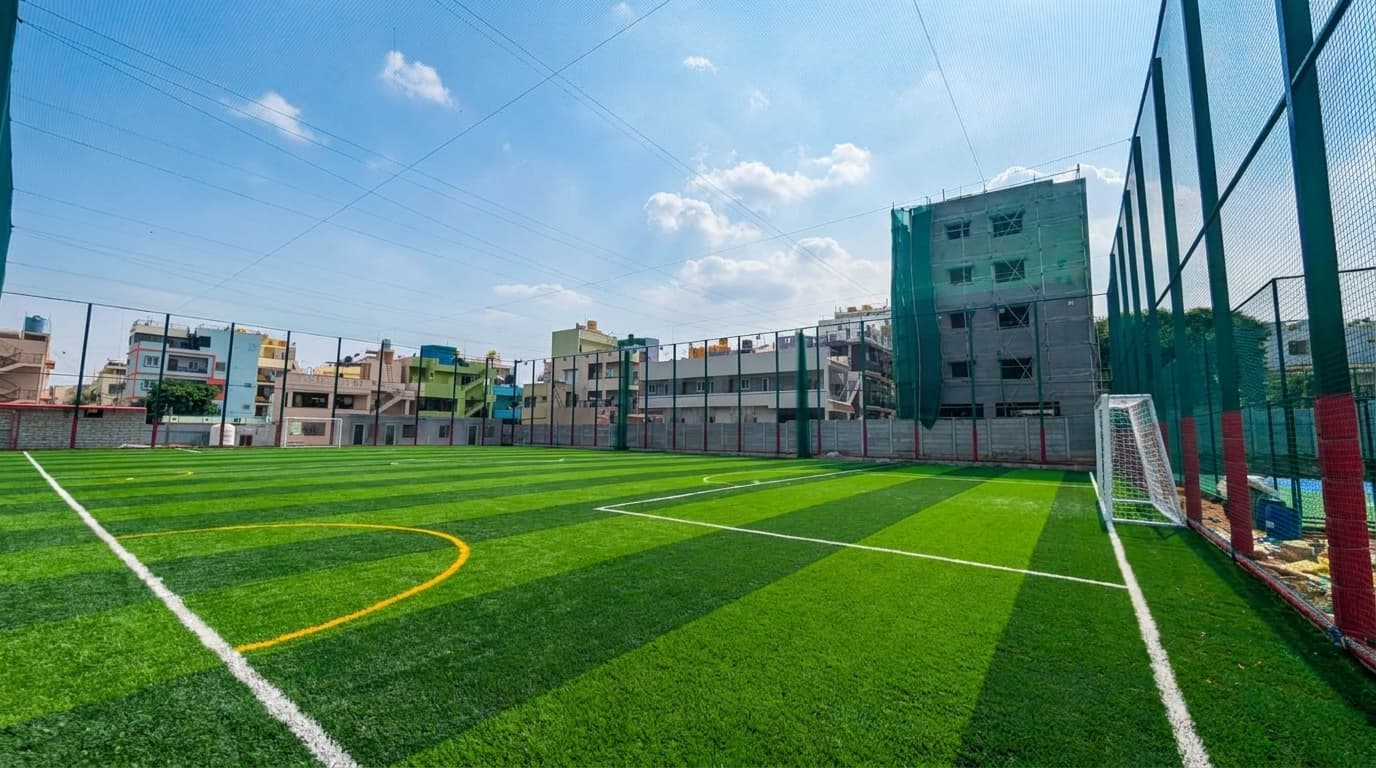
Most amateur football in India is played on short artificial grass (3G or 4G turf) installed over hard concrete or packed gravel bases. Wearing firm ground (FG) studs designed for natural mud pitches will hurt your joints and shorten the life of your boots.
Here is the exact breakdown between Turf Shoes (TF), Firm Ground Studs (FG), Artificial Grass boots (AG), and Indoor Court shoes (IC) so you pick the right pair for your weekend games.
Why Firm Ground (FG) Studs Fail on Artificial Turf
Traditional football boots feature 11 to 14 long, moulded plastic or chevron studs. These are built to penetrate deep, soft natural grass and release cleanly.
When you step onto a synthetic turf cage:
- Zero Stud Penetration: The turf carpet and thin rubber infill layer are only 20 to 40 millimetres deep. The studs cannot sink into the ground.
- Joint Strain and Pressure Points: Your entire body weight sits on a dozen small plastic points pressing directly against the hard concrete base. This leads to bottom-of-foot blisters, shin splints, and excess pressure on knees.
- High Injury Risk: Long plastic studs catch aggressively in artificial fibres during quick turns. When your foot stays locked in place while your knee rotates, ACL and meniscus sprains happen.
- Turf Rules: Many turf operators in Bangalore, Mumbai, and Delhi will not allow players on the pitch with FG or SG studs to prevent carpet tearing.
Why Turf Shoes (TF) Are the Gold Standard for Box Football
Turf shoes (designated as TF by Nike, Adidas, Puma, and Kipsta) are designed specifically for short synthetic carpets.
Key features include:
- Dozens of Small Rubber Nubs: Instead of large blades, the outsole features 50 to 100 tiny rubber studs that distribute your weight evenly across the entire sole.
- EVA Foam Midsole Cushioning: Unlike standard moulded boots with paper-thin insoles, TF shoes include thick EVA or foam midsoles. This absorbs the impact of running on hard concrete bases.
- Reinforced Toe Caps: Box football involves frequent toe pokes and wall scuffs. Turf shoes have stitched suede or rubber toe bumpers that do not rip open after five matches.
Quick Sole Type Comparison: TF vs AG vs FG vs IC
Find & Book Sports Venues
Compare hourly rates, explore photos, and book verified football turfs and badminton courts instantly.
More from GameFeed
Guides and stories to level up your game.

How to Join a Pickup Football Game in Bangalore (Without Knowing Anyone)
Want to play football in Bangalore but do not have a team? Here is exactly how to find and join pickup football games near you — no squad needed, no experience required.
Organise a Pickleball Tournament in India
Format, court maths, entry fees and UPI collection: a step-by-step plan for running your first pickleball doubles tournament in India.